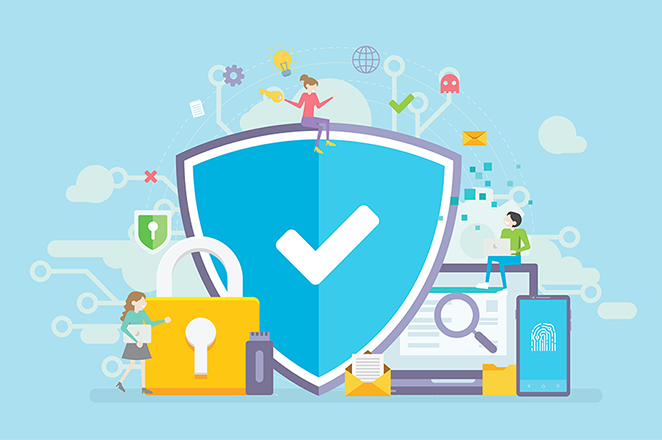
Within information systems, certain users stand out for their special privileges. These include, for example, Directors or Heads of IT Services (CIO and CISO), System and Network Administrators, Infrastructure Managers, but also service providers, particularly remote maintainers…
Whether they are members internal to the company or external contributors, these actors play a crucial role in the organization, management, and evolution of information systems. But with these privileges come significant responsibilities and risks.
We propose to show you how Privileged Access Management and the implementation of an IT bastion can help you protect and control your privileged accounts (internal and external).
Threats and challenges of managing privileged access accounts
The threats
The threats facing privileged accounts are numerous and potentially devastating for organizations in the event of cyberattacks or malicious activity. Cybercriminals often target these accounts, knowing they hold access to the most sensitive parts of an organization's information system. Security breaches, weak or commonly known passwords, and targeted attacks are all risks for businesses.
The challenges of managing privileged access accounts
Managing privileged access users and accounts is crucial for mitigating these threats. You determine who will have access to different resources in your information system. This management aims to proactively control and monitor the actions of privileged users, ensure the confidentiality of sensitive information, and ensure organizations' compliance with regulations, such as GDPR.

Discover our customers' success stories
They chose our PROVE IT bastion to strengthen their security measures and thus protect their essential resources against growing threats.
We then recommend implementing an IT bastion or a PAM solution:
Privileged Access Management.
IT bastion vs. Privileged Access Management: let's define them…
"IT bastion" and "Privileged Access Management" (PAM) are two concepts related to cybersecurity, but they have slightly different functions in protecting information systems. Here is a comparison between the two approaches:
IT bastion:
- Secure entry point: An IT bastion is a secure entry point allowing information system administrators to access sensitive IT resources. It is often a specially configured and hardened server.
- Access control: An IT bastion is designed to strictly manage and control administrators' access to critical systems and data. It ensures that only authorized people—selected privileged users—can access these resources.
- Traceability: An administration bastion typically records all activities performed by users, ensuring complete traceability of actions taken.
- Protection against threats: They are configured to prevent and protect against intrusion attempts and attacks targeting privileged accounts.
Privileged Access Management PAM:
- Privilege management: IT PAM encompasses a set of solutions and best practices aimed at managing privileged accounts securely. This includes credential management, secret rotation, access delegation, digital vault, etc.
- Access control: Privileged Access Management ensures that only authorized users can access target resources, based on the principle of least privilege. It offers granular access control features.
- Audit and compliance: It generates reports or logs on privileged account activities, which is essential for meeting regulatory compliance requirements and detecting any suspicious activity.
- Risk reduction: PAM Privileged Access Management aims to reduce risks associated with privileged accounts. It protects these accounts while enabling secure access when necessary.
In summary, a bastion is generally a secure entry point for administrators, while PAM is a set of practices, software, and technologies aimed at managing and securing privileged accounts across an organization or information system.
Let's clarify the features of a Privileged Access Management solution
Authorize and control third-party and privileged user access
A PAM solution offers real-time visibility into actions taken by privileged users, whether they are part of your employees or external service providers, third parties… These can be consultants, subcontractors, partners, maintenance companies…
It allows you to authorize and control their access to IT resources, notify connections and logs, and track their activities precisely.
Strengthen the security of your privileged accounts
Non-disclosure of credentials and secrets (passwords, keys, etc.) is part of PAM tools and is an essential lever for reducing risks. Indeed, thanks to the secondary credential vault, the secrets of resources are no longer known to your users. It offers an effective solution for efficiently managing team rotations and further securing target resources.
Traceability and compliance with regulations
As mentioned earlier, an IT PAM solution ensures complete traceability of actions performed on the information system. It facilitates rapid identification of the origin of an incident and ensures compliance with applicable standards, regulations, and recommendations (ANSSI, ISO 27001, GDPR, OSE, TISAX…).
An evolving regulatory landscape !
The increase in cyberattacks
As we mentioned at the beginning of this article, cyberattacks have become increasingly sophisticated and frequent. Cybercriminals deliberately target privileged access accounts because these accounts hold the rights to access the most sensitive parts of an organization's IT systems. By compromising these accounts, attackers can cause enormous damage, ranging from data loss to major disruptions and significant financial losses.
Public authority action and evolving regulations
Faced with this growing threat, governments and regulatory authorities have responded by implementing stricter data security regulations. The European Union's General Data Protection Regulation (GDPR) and the Network and Information Systems (NIS2) directive are good examples. These regulations impose strict requirements on organizations regarding personal data protection and cyberattack prevention. An essential component of compliance with these regulations is proper management of privileged access accounts.
In conclusion
The implementation of a PAM solution has become essential for any organization wishing to guarantee the security of its information systems, comply with current regulations, and prevent risks associated with privileged accounts.

Discover our PAM solution - PROVE IT
Other posts

PAM solution & bastion host : the essential safeguard for securing your privileged access
Publish on November 26, 2025

Passkeys : A new era for strong authentication
Publish on June 03, 2025

Active Directory : Microsoft's Complete Directory
Publish on October 28, 2024