Manage and secure your privileged access with a PAM solution
Your needIn an increasingly hostile cyber landscape, Privileged Access Management (PAM) is no longer an option, but a regulatory and strategic necessity. Discover how PROVE IT protects your sensitive data and critical systems in a simple and effective way.

What is Privileged Access Management (PAM)?
Privileged Access Management, known by the acronym PAM, refers to the set of methods, technologies and policies aimed at controlling, securing and monitoring accounts with elevated rights within an information system.
Which accounts are concerned by privileged access?
Privileged access primarily concerns:
- Administrator accounts
- Service accounts and application technical accounts
- Accounts used to administer network equipment, servers, databases or critical applications
- Accounts used to access cloud environments or outsourced resources
Unlike standard user accounts, these privileged accounts have extended capabilities: modifying system configurations, creating or deleting users, accessing sensitive data, or executing actions impacting the entire organization. It is precisely this breadth of rights that makes them priority targets for attackers.
Beyond human access, other types must not be overlooked : service accounts, automated scripts, connectors between applications… These technical access points are often the most difficult to monitor, as they operate in the background, outside of any formal validation process. Rigorous privileged access management must therefore cover all of these identities, both human and application based.
What principles underpin Privileged Access Management?
An effective PAM strategy rests on several fundamental principles:
- The least privilege principle: each user or application only has the rights strictly necessary for their tasks, and only for as long as needed. This principle is the first line of defense against privilege escalation and lateral movement.
- Strong authentication (MFA): all privileged access must be protected by multi-factor authentication to reduce the risks associated with credential compromise. In a zero trust approach, identity alone is no longer sufficient: it must be verified at every connection, regardless of context.
- Control over privilege assignment and duration: elevated rights are granted on a temporary and revocable basis, following a just-in-time access model. This approach significantly reduces the attack surface associated with accounts holding permanent and often excessive rights.
- Session traceability and auditing: all activities carried out via a privileged account are recorded and auditable, to ensure compliance and enable analysis in the event of an incident.
Privileged Access Management also fits within a broader identity governance framework (IAM — Identity and Access Management), complementing identification, authentication and rights control mechanisms across the organization. Where IAM covers all users, PAM focuses on the most sensitive access points, those which, if poorly managed, can jeopardize the entire information system. As such, it constitutes one of the most structurally important pillars for any organization seeking to manage its cyber risks effectively.

Why has securing privileged access become an imperative?
In a context where IT environments have become hybrid (cloud, remote work, distributed infrastructures, third-party interconnections…), the attack surface associated with privileged accounts has considerably expanded. Securing sensitive access has therefore become an unavoidable pillar of any cybersecurity strategy.
80% of targeted attacks involve the compromise of a privileged account
Privileged access: the first vector for cyberattacks
In the vast majority of documented cybersecurity incidents, account compromise is one of the first steps in the attack chain. When an attacker manages to take control of a high-privilege account, they can :
- Move laterally across the organization's network without triggering any alerts
- Disable security mechanisms (antivirus, EDR, firewall)
- Exfiltrate critical data : customer files, intellectual property, health data, financial or strategic information
- Deploy ransomware, paralyzing all systems
The reality on the ground is often even more concerning: in many organizations, privileged accounts are shared among multiple administrators, their credentials are never rotated, and their activity is subject to no active monitoring. This accumulation of poor practices creates blind spots that attackers know exactly how to exploit.
Protecting privileged access therefore helps reduce the risk of intrusion, limit the impact of a compromise, and contain the spread of an attack within the information system.
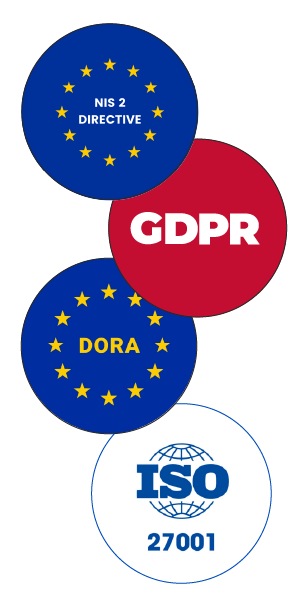
Increasingly stringent regulatory requirements
Beyond operational risk, organizations are subject to growing regulatory obligations that impose strict control over privileged access:
- NIS2 : requires essential and important entities to implement cyber risk management measures, of which securing sensitive access is a key component
- GDPR : requires the protection of personal data, particularly through access control to the systems that host it (any untracked access to a database constitutes a compliance risk)
- DORA : strengthen traceability and resilience obligations for the financial and public sectors, by imposing monitoring capabilities and incident response related to sensitive access
- ISO 27001 / SOC 2 : incorporate privileged access management as an internal control requirement, with documented and auditable processes
For any organization (SMB, mid-sized enterprise, or public sector body), implementing a suitable PAM solution means both reducing risk and demonstrating compliance during external or internal audits. Solutions available on the market vary greatly in terms of functional scope, data sovereignty, and certification level: the choice of tool is critical to the robustness of the overall security framework.
The administration bastion : the solution to (re)gain control over your privileged access
An administration bastion is the central component of any PAM strategy. By acting as the mandatory gateway between users and target resources (servers, databases, business applications, network equipment), it eliminates the risks associated with uncontrolled access and ensures complete oversight of privileged sessions.
Without a bastion, every administrator or external contractor can potentially access critical resources directly, with no control and no audit trail. With a PAM solution, no direct connection is possible : every access is authenticated, authorized, recorded, and can be terminated at any time.
Concretely, a PAM solution like PROVE IT delivers the following capabilities :
- Granular access control : access restricted to strictly necessary systems, with defined time windows and role-based segmentation (RBAC) to eliminate excessive privileges and enforce the principle of least privilege at scale
- Full session recording : comprehensive video recordings and logs of every session performed by privileged accounts, usable as evidence during an audit or investigation
- Real-time monitoring : immediate visibility into all active sessions, alerts on suspicious activity, with the ability to remotely terminate a session without delay
- External access management : structured oversight of contractor and third-party interventions, with time-limited, tracked, and instantly revocable access — without exposing your internal resources
- Out-of-the-box compliance : meets the requirements of ANSSI, GDPR, NIS2, and ISO 27001 frameworks, with complete traceability of all access and actions performed on the information system
Among the PAM solutions available on the market, our administration bastion stands out for its ability to integrate seamlessly into any enterprise environment, with no operational disruption and no agent to deploy, while centralizing all sensitive access in a single, auditable point.


Discover PROVE IT PAM solution
With PROVE IT bastion host, you regain full control over your privileged access.
An integrated secondary credentials vault to protect your secrets
Admin passwords, SSH keys, application secrets… These credentials are at the heart of your organization's security. Yet their management remains a blind spot for many companies : shared by email, stored in unencrypted files, reused across systems… Privileged credentials are a prime target for attackers, and a growing source of regulatory risk in the face of ever-tightening compliance requirements.
The problem is structural : in a large number of organizations, secrets management is not backed by any formalized process. Credentials circulate freely, access is not revoked after an intervention, and no tool provides visibility into who used which account, when, and for what purpose. This lack of control exposes the organization to both operational and regulatory risks.
The credentials vault integrated into PROVE IT addresses this challenge in a simple and transparent way for your teams :
- Your users never have access to the actual credentials : secrets are automatically injected at session opening, without the user ever seeing or being able to extract them. Privileged accounts are used without ever being exposed.
- Your compliance is guaranteed : audited and CSPN-certified by ANSSI, the vault meets the requirements of the main regulations in force and allows you to demonstrate, at any time, that access to your critical resources is fully under control.
The result : even if a user workstation is compromised, your servers and applications remain out of reach.
PROVE IT, the 100% french and certified by ANSSI PAM solution
Developed in Rennes since 2014, PROVE IT is much more than an administration bastion: it is a PAM solution, designed to control, trace and secure every sensitive access to your information system in a simple and efficient way.
Unlike many PAM solutions, PROVE IT is a French tool, built to meet the specific requirements of companies and public organizations : data sovereignty, compliance with national and European regulations, and close support from a dedicated team based in France.
What sets PROVE IT apart
- CSPN certification by ANSSI : A security visa that attests to the solution's level of protection, facilitates your organization's compliance journey, and serves as a recognized mark of trust by French authorities
- Fast and non-invasive deployment : Up and running in 30 minutes, compatible with all environments (on-premise, hybrid), with no modifications to your existing infrastructure and no complex integrations
- Total control over privileged sessions : You know who connects, when, to which system, and what is done — with video recording of sessions for complete traceability
- Integrated credentials vault : Protection of secrets and privileged credentials, without ever exposing them to users
- Outpost Module : Securing remote access for your contractors, subcontractors and external administrators — without VPN — with the same level of control and monitoring as internal access
- Ease of use : Personalized kiosk, native compatibility with RDP/SSH/HTTPS clients, intuitive interface designed for both administrators and non-technical users
- Responsive support & guidance : A English-speaking team available to assist, with a free evaluation license to test the solution in your real environment

Secure your Privilegied Acces with PROVE IT
Discover our PAM solution PROVE IT to centralize, control and trace all your sensitive access.