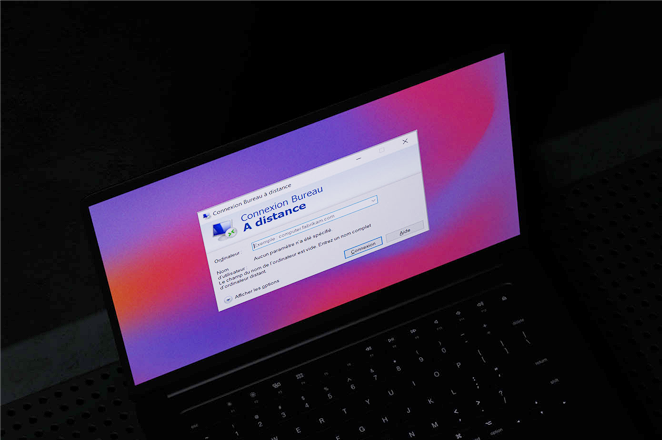
The Remote Desktop Protocol (RDP) has come a remarkable way since its launch by Microsoft, transforming from a technology initially criticized for its security weaknesses into a strong and reliable remote control solution. This article explores the evolution of RDP, emphasizing its progress in terms of usage flexibility, security advancements, and impact on the modern technology landscape.
RDP Usage and Flexibility
Remote Control and Versatility
The Remote Desktop Protocol (RDP) has established itself as a versatile and essential protocol in various professional contexts, particularly for technical support, IT system management, and remote work. Its ability to adapt to different scenarios, from individual assistance to managing vast enterprise networks, makes it a solution of choice for many system administrators. The growing importance of remote work has further strengthened RDP's role, enabling secure and efficient access to work environments, regardless of geographic location.
RDS (Remote Desktop Services) farms and thin clients represent a key solution for enterprises seeking to optimize their IT resource management.
An RDS farm is a set of servers that, working together, provide remote desktop services to a large number of users. This configuration enables efficient centralization of applications and data, offering users remote access to a consistent and controlled work environment, regardless of their geographic location.
Thin clients, often used in this context, are simplified computers designed primarily to connect to a remote server. With little or no local storage or processing capacity, thin clients depend on the server to run applications and manage data, which reduces hardware costs and maintenance expenses while improving security and ease of workstation management.
Importance in Windows Administration
RDP plays a crucial role in Windows system administration, thanks to its native integration and ease of use in this ecosystem. This integration offers a smooth and consistent user experience, simplifying the configuration and administration of remote connections. By enabling administrators to remotely access and manage Windows systems, RDP becomes a fundamental protocol, particularly in large organizations where IT resources are distributed across multiple sites. Its ease of use reduces the learning curve for new users, thereby increasing operational efficiency.
The evolution of RDP security
From weak to resilient: A security journey
The evolution of the Remote Desktop Protocol (RDP) security is a crucial facet of its history. Initially criticized for its security vulnerabilities, RDP has undergone significant improvements to become a strong and reliable remote control solution. These improvements reflect a proactive adaptation to changing cybersecurity challenges. Among the major transformations, the introduction of Network Level Authentication (NLA) and the strengthening of encryption via Transport Layer Security (TLS) have significantly enhanced the security of RDP connections. These measures have added essential layers of authentication and data protection, thus transforming RDP into a more secure solution, suited to modern requirements.
Technical configuration of RDP to strengthen security
Proper technical configuration of RDP is important to ensure the protection of remote connections. Key elements of this configuration include the use of Network Level Authentication (NLA) and Transport Layer Security (TLS), as well as effective management of access policies.
Network Level Authentication (NLA) provides an essential first line of defense by requiring user authentication before establishing an RDP session. This early authentication method helps prevent unauthorized access attempts and denial-of-service attacks.
Transport Layer Security (TLS) is used to encrypt RDP exchanges following a connection, thus protecting the confidentiality and integrity of exchanged data. Implementing TLS requires valid certificates to authenticate the RDP server, ensuring an encrypted and authenticated connection.
From a security perspective, exposing an RDP server directly to the internet is a bad practice that should be avoided. If a VPN solution cannot be implemented, it is recommended to change the default TCP port 3389 to a less-known port to reduce the risk of non-targeted attacks. The firewall configuration should be adjusted to allow only necessary RDP connections while blocking unauthorized access.
It is also important to :
- Assign RDP access rights based on user roles, limiting access to necessary features and resources, according to the principle of least privilege.
- Ensure that RDP software and the operating system are regularly updated with the latest security patches to correct vulnerabilities.
These measures, while not exhaustive, form a solid foundation for securing RDP connections. Regular security audits are also advised to identify and correct any potential vulnerabilities.

Discover PROVE IT, our PAM solution
Our solutionThe PROVE IT bastion host is certified by the CSPN Security Visa issued by ANSSI, a guarantee of robustness and trust.
Comparison with other protocols
RDP vs SSH : Different approaches to remote control
Microsoft's RDP, which not only allows file manipulation but is particularly optimized for graphical interface transfer, distinguishes itself by its ability to transmit remote desktop images, thus facilitating tasks requiring visual interaction, such as maintaining systems with complex graphical interfaces. However, this image transmission can require greater bandwidth, making RDP relatively resource-intensive.
In contrast, SSH (Secure Shell), although it allows remote graphical access, is not optimized for this action and focuses on transmitting text commands and file manipulation, offering increased efficiency in terms of resource consumption and bandwidth. This makes SSH ideal for system administration tasks that do not require a graphical interface, such as server management or remote script execution.

PROVE IT, PAM solution, uses both RDP and SSH protocols
Our PROVE IT PAM solution software solution uses both protocols.
Not only does PROVE IT add a layer of security that is proven, but it also reinforces best practices by using a default configuration that complies with ANSSI recommendations, which is not the case with some RDP clients/servers.
PROVE IT controls and traces sessions via these different protocols and even records sessions in video format.
RDP vigilance points
Vulnerability management and security best practices
Although RDP has evolved to become more secure, it remains essential to recognize and manage its potential vulnerabilities. Among the notable challenges, the use of the NTLM (NT LAN Manager) protocol in certain RDP contexts can present weaknesses, particularly the vulnerability of "replayable" password hashes. This underscores the importance of using more reliable and secure authentication methods.
The use of a VPN accompanied by a firewall and our PROVE IT PAM solution enables mitigation of the requirement to open network flows.
Application of best practices
Administrators play a crucial role in securing the Remote Desktop Protocol (RDP). To ensure safe RDP use, it is imperative to apply adequate secure configurations. This includes, in particular, rigorous management of access and permissions, limiting RDP access only to users requiring remote control and assigning rights strictly necessary for their tasks. Such practices reduce the attack surface and minimize security risks. Obviously, the use of a VPN or a secure web portal (such as the one provided in our PROVE IT solution) is essential.
Furthermore, regular system maintenance is essential. Applying updates and security patches is critical to protect against emerging vulnerabilities and threats. These updates often address recently discovered security flaws and strengthen RDP security features.
Conclusion
The evolution of the Remote Desktop Protocol (RDP) since its creation is remarkable, both in terms of features and security. This transformation reflects the progress of technology and the changing needs of the IT landscape.
Improvements in flexibility and usage, such as versatile remote control and seamless integration with Windows systems, have made RDP indispensable in many professional and technical scenarios. The evolution of its security, moving from initial vulnerabilities to a reliable solution incorporating technologies like NLA and TLS, testifies to the ongoing commitment to make RDP reliable and secure.
In the current context, RDP plays a crucial role. It facilitates remote work, supports complex IT operations, and continues to be a cornerstone in remote system management. RDP has demonstrated a remarkable ability to adapt and evolve, thus meeting changing security challenges and operational requirements.
Looking forward, RDP appears ready to continue its evolution. Its role in supporting hybrid work environments and facilitating remote IT management will likely continue to strengthen, underscoring its importance in the future technology landscape.

Why You must have a bastion host ?
Discover why a bastion host like PROVE IT is an essential solution for securing privileged access to your IS.
Other posts

PAM solution & bastion host : the essential safeguard for securing your privileged access
Publish on November 26, 2025

Passkeys : A new era for strong authentication
Publish on June 03, 2025

Active Directory : Microsoft's Complete Directory
Publish on October 28, 2024